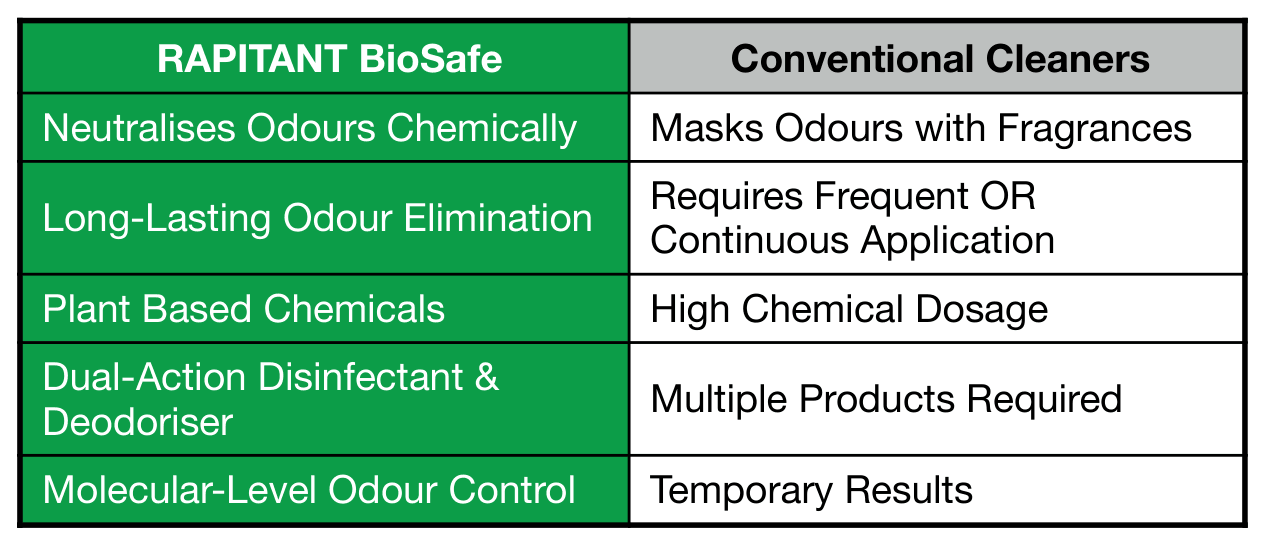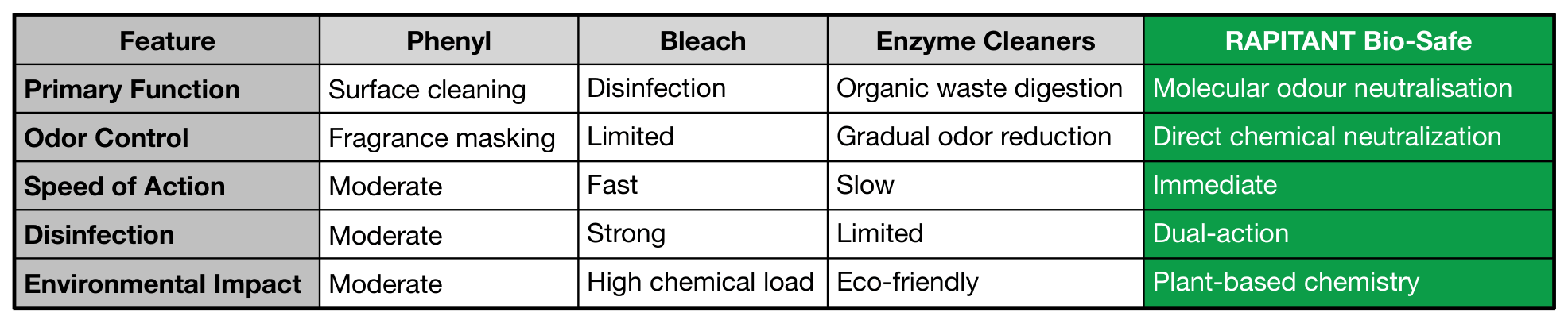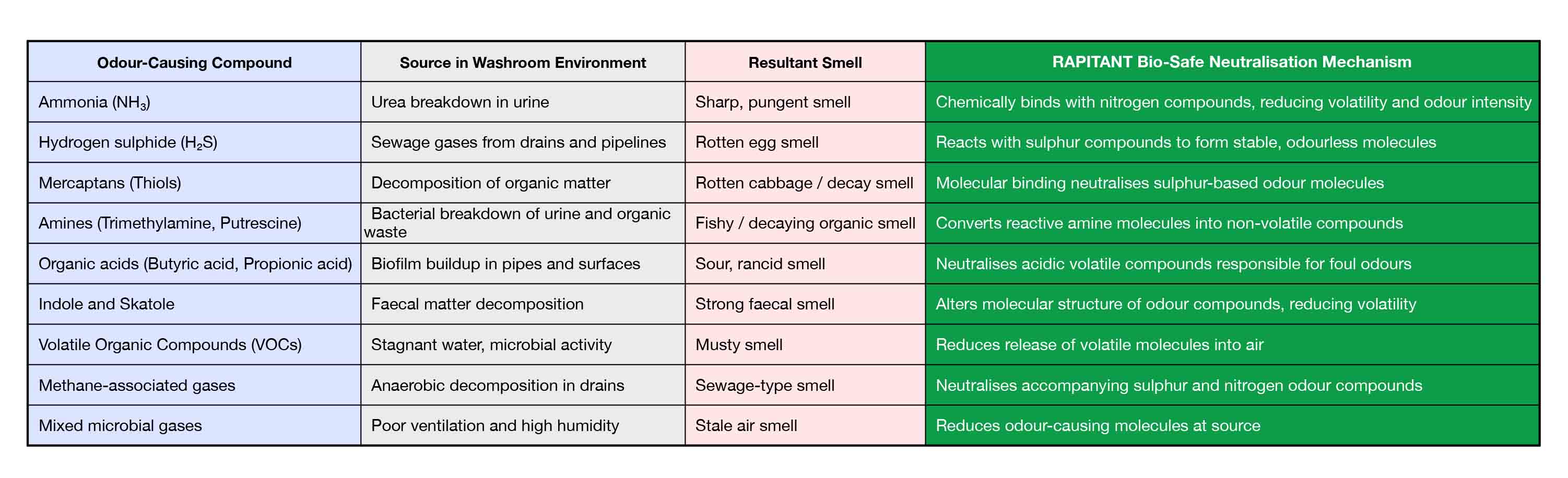
Urban sanitation systems face increasing pressure from rising population density, growing waste volumes, and heavily used public infrastructure. Traditional cleaners such as phenyl, bleach, and fragrance-based deodorants often mask unpleasant smells rather than addressing their source, leading to frequent reapplication and high chemical usage.
This advanced sanitation technology neutralises odour-causing compounds at the molecular level by chemically binding with key odour-forming molecules and converting them into stable, odourless substances. The result is longer-lasting freshness, improved hygiene, and greater operational efficiency. The solution provides dual-action performance, functioning as both a disinfectant and an odour neutraliser, making it suitable for public washrooms, waste management systems, municipal sanitation infrastructure, and other high-traffic environments.
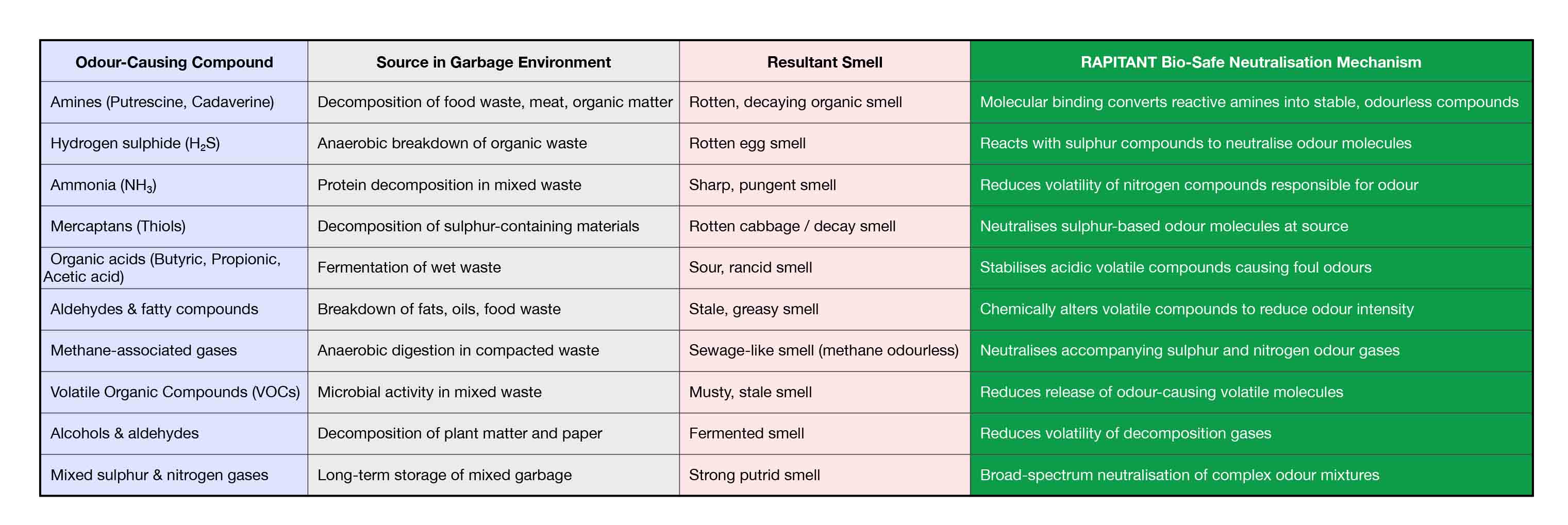
Waste handling areas such as garbage collection points, transfer stations, and segregation facilities generate gases including ammonia, hydrogen sulphide, mercaptans, amines, and methane during decomposition of organic waste. By neutralising these compounds as they are released, the technology delivers continuous odour control, improves sanitation conditions, and supports more sustainable management of high-waste environments